Each year, ACCIONA calls for submissions from its workforce for practical ideas that can be implemented across the business to reduce carbon emissions. The aim is to develop solutions that not only reduce ACCIONA’s own emissions, but can also be replicated across the construction industry.
Each year, ACCIONA calls for submissions from its workforce for practical ideas that can be implemented across the business to reduce carbon emissions. The aim is to develop solutions that not only reduce ACCIONA’s own emissions, but can also be replicated across the construction industry.
The funding for these concepts comes from the company’s Decarbonisation Fund, which has invested more than $1.76 million in initiatives across Australia and New Zealand since 2022.The fund is helping accelerate lower-carbon construction solutions while supporting ACCIONA’s emissions reduction targets.
Turning employee ideas into lower-carbon solutions
The investment in people, ideas and resources strengthens ACCIONA’s commitment to reducing Scope 1 and Scope 2 emissions by 60 per cent between 2017 and 2030. Scope 1 emissions are generated directly by the company’s operations, while Scope 2 emissions come from purchased energy.
ACCIONA continues to align its climate strategy with the most ambitious goal of the Paris Climate Agreement: limiting global warming to no more than 1.5°C above pre-industrial levels. Achieving this requires significant reductions in both direct emissions and emissions associated with energy consumption.
- “The decarbonisation fund empowers teams to identify and deliver real-world solutions that reduce emissions across our operations,” said Chris Bourne, Head of Sustainability at ACCIONA.
- “By supporting innovative ideas and scalable technologies, the fund is helping ACCIONA accelerate progress towards its climate goals while creating lasting value for the business.”
From carbon pricing to direct emissions reduction
ACCIONA was among an early group of global organisations, including Microsoft and Swiss Re, to adopt an internal carbon pricing mechanism. By placing a financial value on carbon emissions, the company has encouraged lower-carbon decision-making across the business. This approach underpinned the development of the Decarbonisation Fund. ACCIONA achieved carbon neutrality in its direct operations in 2016. Originally established to purchase offsets for operational emissions, the fund evolved in 2020 to support initiatives that directly reduce the company’s carbon footprint, reinforcing a focus on emissions reduction at the source.
23 initiatives testing practical solutions
Employees across Australia and New Zealand are encouraged to submit proposals that lower emissions, improve operational efficiency or trial alternative technologies. Projects go through a structured application process, with a selection committee assessing priorities before senior management determines final funding allocations.
Since 2022, 23 funded initiatives have helped ACCIONA test and validate a range of practical solutions across its operations.
- Not every idea is immediately scalable.
However, the lessons learned from individual projects can be transferred to other projects and locations, helping successful concepts evolve beyond their original application.
- One example is the fund’s support for the use of calcined clay across major infrastructure projects in Victoria.
Calcined clay: reducing the carbon footprint of concrete
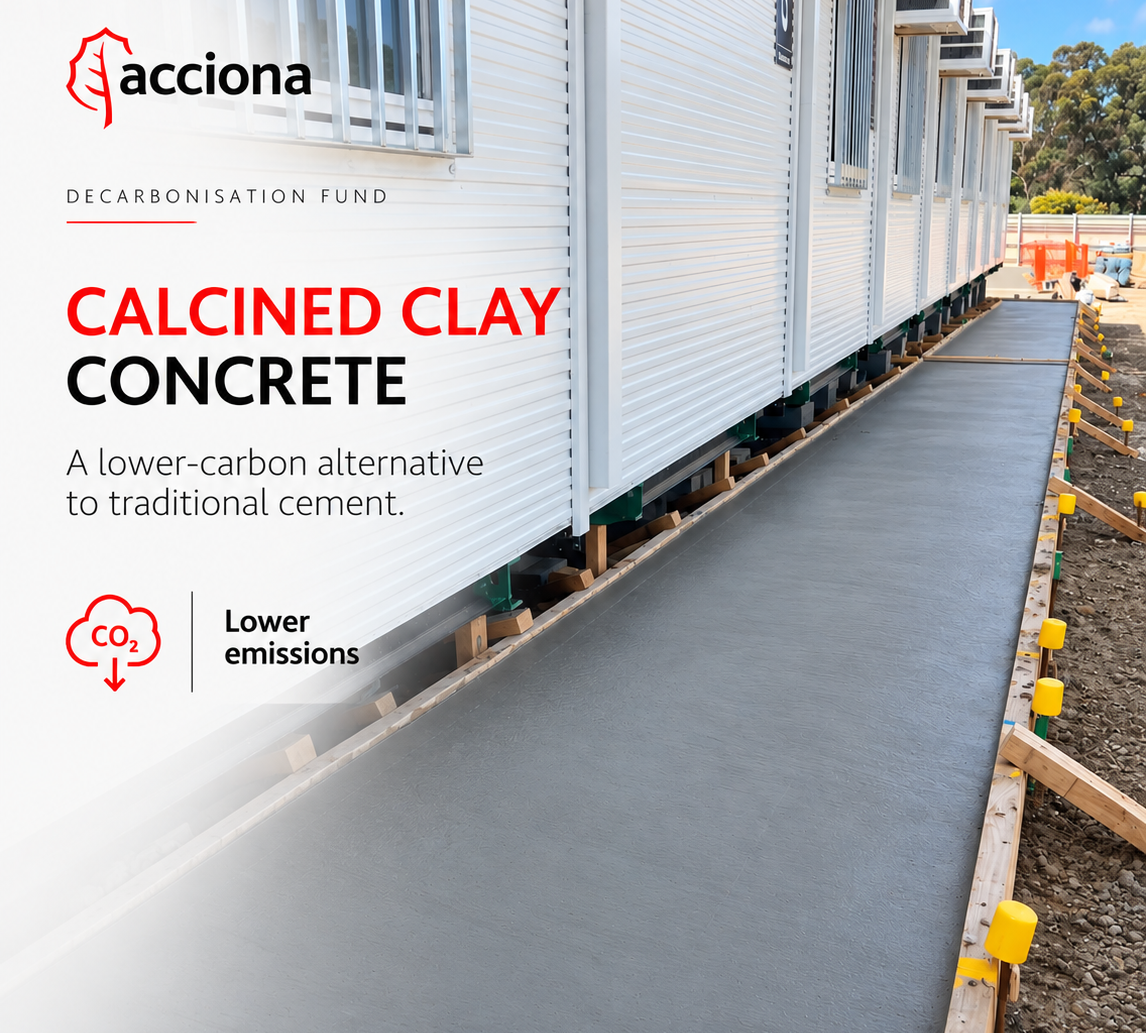
Traditional cement is a significant source of greenhouse gas emissions. Limestone releases CO₂ when it decomposes during production, while the high temperatures required to manufacture cement also consume large amounts of energy. Using supplementary cementitious materials (SCMs) can help reduce these emissions. Calcined clay provides an alternative to limestone. In a 2024 trial, clay removed from a project site was processed into SCM and then returned to the site for use in concrete.
The trial demonstrated that calcined clay could work effectively, but it also highlighted a challenge. Relying on clay recovered from individual construction sites created an unreliable supply of SCM.
From trial to scalable supply chain
By 2026, the lessons from the original Decarbonisation Fund-supported trial had been transferred to another Victorian transport project.
The project team worked with concrete suppliers to address the supply challenge and helped establish a more consistent source of calcined clay from a Victorian mine.
- “The concrete suppliers made it clear that if we were going to continue to ask for a calcined clay mix, they would need a consistent supply. So, we helped prompt a whole supply chain around a clay mine in Victoria,” explained Andrew Kovacs, the project’s Sustainability Manager.
The mine-sourced calcined clay cement mix is now being used in non-structural concrete on the project. To date, it has saved approximately 400 tonnes of greenhouse gas emissions. The team is also working through the changes required to Victoria’s regulatory framework to enable the clay to be used in structural concrete.
Giving waste materials a second life
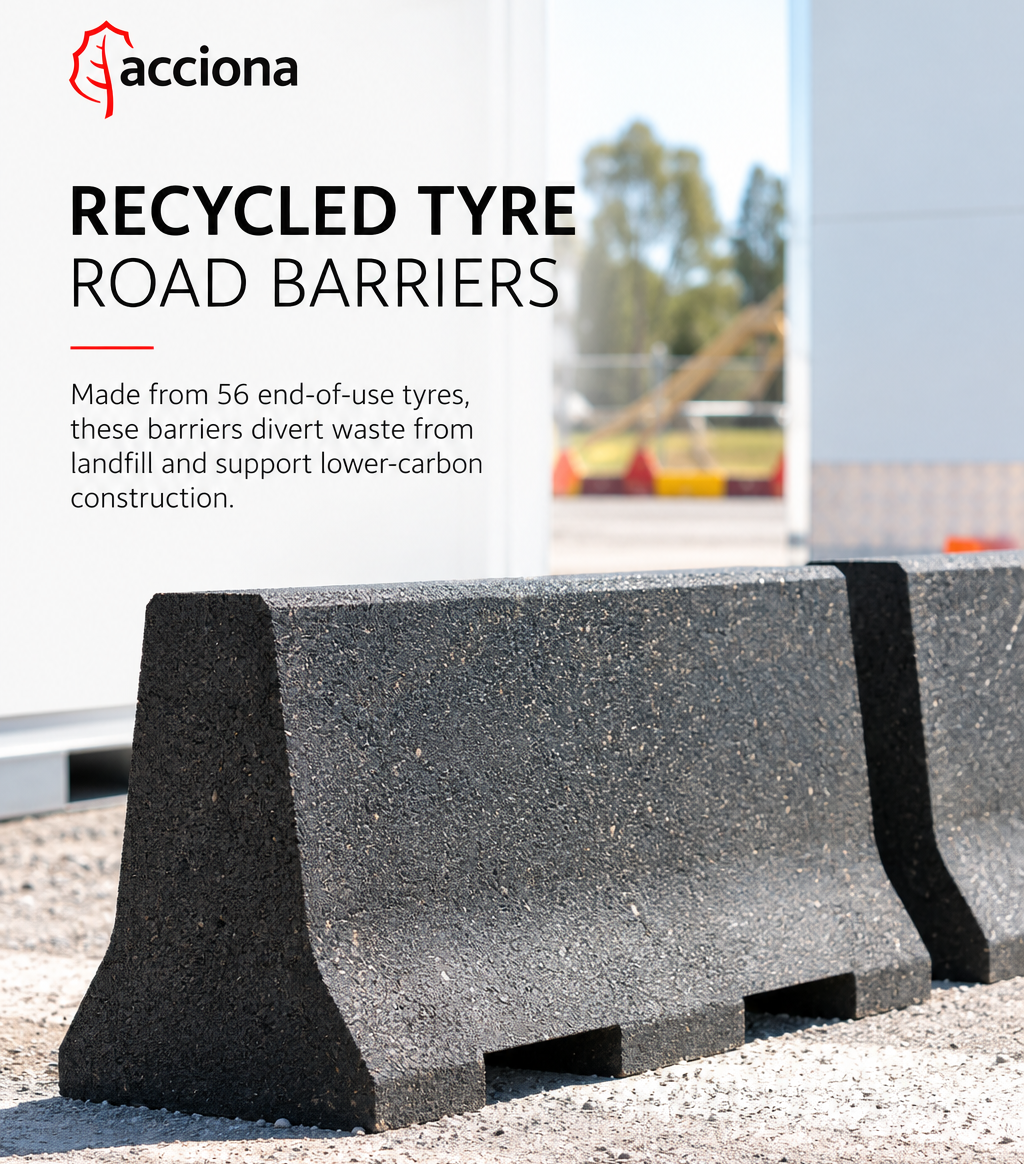
The Decarbonisation Fund also supports innovations that use recycled materials in construction. One example is the trial of recycled crumbed rubber road barriers. After the construction and sustainability teams identified the product, they successfully applied to the fund to support a pilot. Each barrier is made from 56 end-of-use tyres, helping divert tyres from landfill while providing an alternative solution for construction sites.
3D-printed concrete huts reduce cost and waste
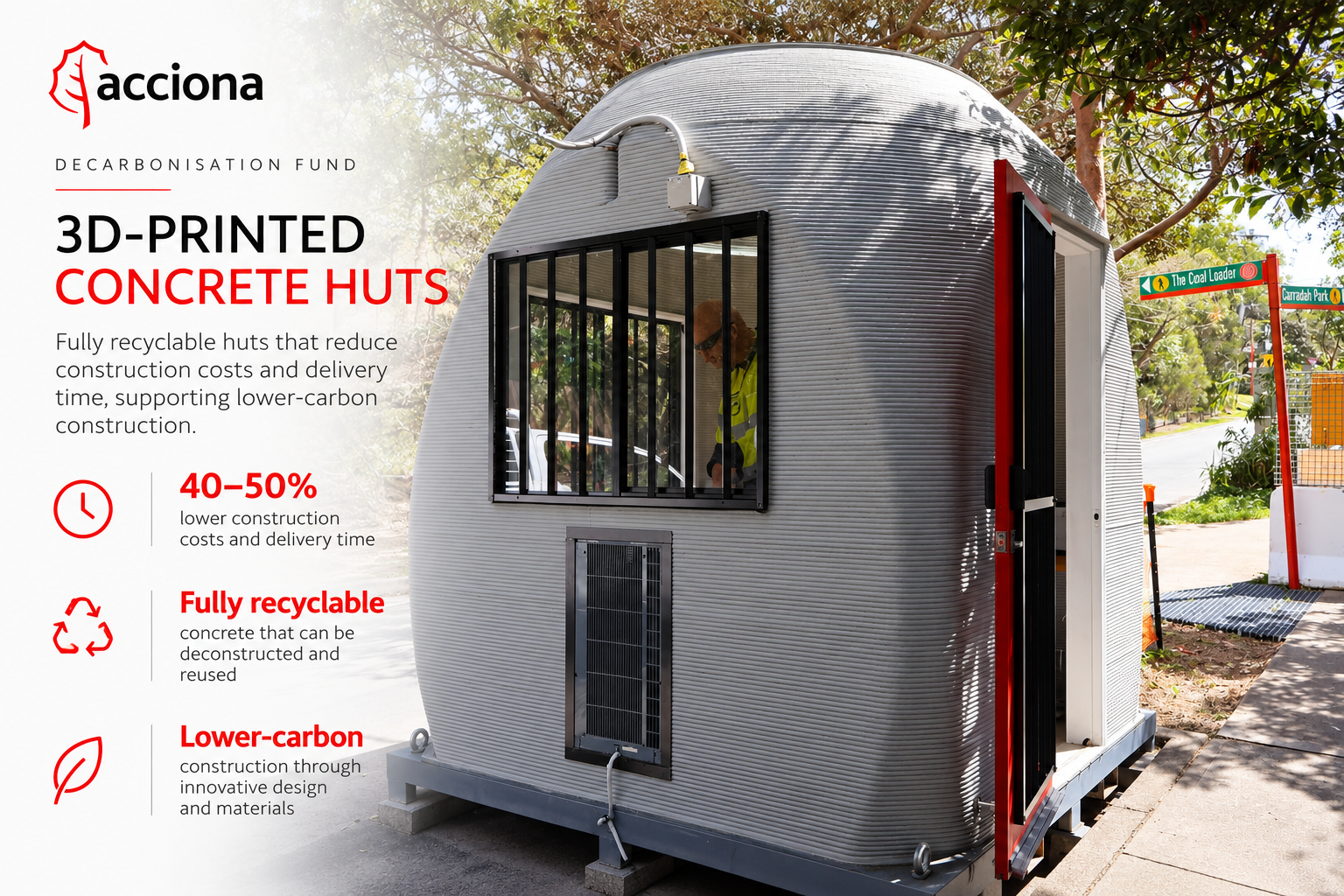
Another initiative supported by the fund is the trial of 3D-printed traffic control and security huts on a large transport project in Sydney. The huts are made from patterned, contoured concrete that is fully recyclable. Unlike traditional huts, the concrete can be deconstructed and mixed with other materials to create new structures.
This supports the principles of circular construction while reducing construction waste. The technology also delivers significant operational benefits. Both construction time and cost have been reduced by 40–50 per cent compared with standard huts. The security team identified the technology and worked with the sustainability team to apply for funding.apply for funding.
- “Often people have great ideas and great initiatives, but you need that extra influx of cash to make these things happen,” said Hannah Willoch, Sustainability Coordinator. “The fund gives projects a good opportunity to do something extra that benefits construction and sustainability outcomes.”
Scaling innovation across the construction industry
Importantly, the Decarbonisation Fund supports both internally developed initiatives and solutions created by external suppliers. This approach allows ACCIONA to test proven technologies more quickly and explore how successful solutions can be applied across different projects and locations. The experience with calcined clay demonstrates how an initial trial can generate lessons that lead to a more scalable solution, while the recycled tyre barriers and 3D-printed structures show how alternative materials and technologies can deliver both environmental and operational benefits.
Accelerating ACCIONA’s decarbonisation goals
The Decarbonisation Fund demonstrates how targeted investment can help turn ideas into practical solutions for lower-carbon construction. With more than $1.76 million invested since 2022, 23 initiatives funded and projects already delivering measurable emissions savings, the programme is helping ACCIONA explore new ways to reduce its environmental impact while improving construction processes. As ACCIONA continues to expand its lower-carbon initiatives, the fund is expected to play an increasingly important role in identifying, testing and implementing solutions that contribute to the company’s long-term climate objectives.